
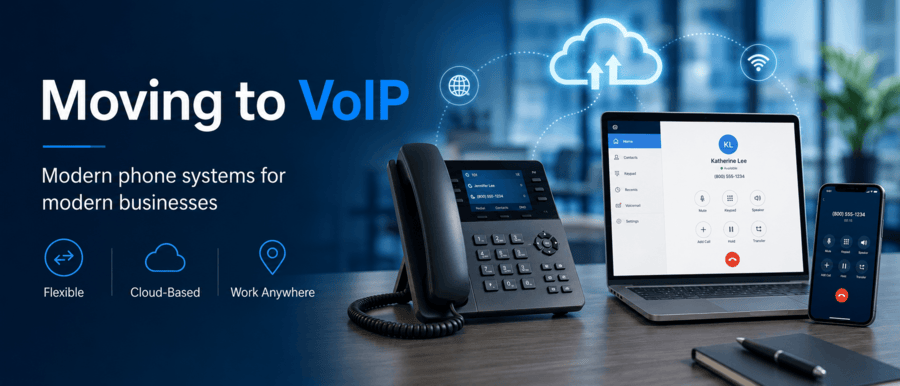
For many years, business phone systems were built around traditional copper phone lines, often called POTS lines, which stands for “Plain Old Telephone Service.” These phone lines were reliable for their time, but business communication has changed dramatically. Today, companies need more than a basic dial tone. They need flexibility, mobility, call routing, voicemail-to-email, remote work support, better disaster recovery, and tools that help employees communicate from almost anywhere.
That is why more businesses are moving to VoIP phone service.
VoIP, or Voice over Internet Protocol, allows phone calls to be made and received over an internet connection instead of a traditional analog phone line. For many small and medium-sized businesses, switching to a VoIP phone system is one of the most practical technology upgrades they can make. It can improve customer service, reduce reliance on outdated phone infrastructure, simplify management, and provide features that would have been expensive or difficult to add with older phone systems.
At Pennyrile Technologies, we partner with Intermedia to provide reliable, business-class VoIP solutions designed for modern workplaces. Whether your business is replacing aging phone lines, opening a new office, supporting remote employees, or trying to improve how calls are handled, VoIP can provide a more flexible and feature-rich phone experience.
What Is VoIP?
VoIP stands for Voice over Internet Protocol. In simple terms, it means your phone calls travel over your internet connection instead of using traditional telephone company copper lines.
With a traditional phone system, each line is typically tied to a physical connection. Businesses often needed phone company service calls, on-site PBX hardware, special wiring, and separate systems for voicemail, call forwarding, and advanced call routing. Adding or moving extensions could be slow and expensive.
With VoIP, your phone system is cloud-based. Desk phones, mobile apps, desktop apps, and other devices connect through the internet to your business phone service. Employees can make and receive calls using their office number whether they are sitting at their desk, working from home, traveling, or using a mobile device.
A VoIP system can still feel familiar to employees. They can use a physical desk phone just like they always have. The difference is that the phone system behind the scenes is much more flexible, easier to manage, and better suited for the way businesses work today.
Why Businesses Are Moving Away from Traditional POTS Lines
Traditional POTS lines were once the standard for business communication, but they are becoming less practical for many companies. Phone companies are investing less in old copper infrastructure, prices for analog lines have increased in many areas, and repairs can be slower as legacy systems age.
Businesses are also using phones differently than they did 20 years ago. Employees may work from multiple locations. Customers expect fast responses. Managers need better visibility into missed calls and call activity. Receptionists may need to route calls across offices, departments, or remote staff. Traditional phone lines were not built for that level of flexibility.
VoIP phone service gives businesses the ability to modernize without needing a large, complicated on-site phone system. Instead of maintaining old PBX equipment in a closet, businesses can use a cloud phone system that receives updates, supports advanced features, and can grow as the company grows.
Advantages of VoIP Over Traditional Phone Lines
1. More Flexibility for Employees
One of the biggest advantages of VoIP is flexibility. Employees are no longer tied to a single desk or office location. With the right VoIP service, users can make and receive business calls from a desk phone, computer, or mobile app.
This is especially valuable for businesses with remote employees, technicians in the field, salespeople, managers who travel, or staff who split time between home and the office. A customer can call the main office number, and the call can still reach the right person no matter where that employee is working.
This creates a more professional experience for customers and a more practical setup for employees.
2. Better Call Handling and Routing
Traditional phone systems often require expensive add-ons or complicated programming to handle call routing. VoIP systems make these features much more accessible.
With a modern VoIP phone system, businesses can use features such as auto attendants, call queues, ring groups, direct inward dialing, extension dialing, holiday schedules, and after-hours routing. Instead of every call going to one phone or one receptionist, calls can be directed to the right department or person automatically.
For example, your business can set up a greeting such as:
“Thank you for calling. Press 1 for sales, press 2 for support, press 3 for billing, or press 0 for the operator.”
That type of professional call flow can help customers reach the right person faster and reduce unnecessary interruptions for staff.
3. Mobility and Remote Work Support
A traditional office phone system is usually tied to the office building. If the office loses power, has an internet issue, or must close unexpectedly, calls can become difficult to manage.
VoIP improves mobility and business continuity. Employees can often use a mobile app or desktop app to continue making and receiving calls. Calls can be routed to alternate users, mobile devices, or other locations. This can be very helpful during weather events, office moves, renovations, outages, or unexpected closures.
For businesses that cannot afford to miss customer calls, this flexibility matters.
4. Professional Features Without Expensive On-Site Hardware
Older business phone systems often required a physical PBX installed at the office. That equipment could be expensive to purchase, maintain, and replace. Adding advanced features often meant buying additional hardware, licensing, or service from a specialized phone vendor.
Cloud VoIP reduces the need for large on-site phone system equipment. Many features are built into the service and managed through an online portal. This can make it easier to add users, change call routing, update greetings, manage voicemail, and adjust settings as business needs change.
For small and medium-sized businesses, this can be a major improvement over maintaining outdated phone equipment.
5. Voicemail and Message Management
Voicemail has come a long way from the days of blinking red lights on a desk phone. Modern VoIP services can offer voicemail notifications, voicemail-to-email, and voicemail transcription features. This helps employees keep up with messages even when they are away from the office.
Instead of dialing into a voicemail box and listening through each message, users can often receive voicemail notifications and review messages from an app or email. For busy staff, managers, and sales teams, this can save time and reduce missed opportunities.
6. Improved Customer Experience
Your phone system is often one of the first impressions customers have of your business. If calls are missed, routed incorrectly, or sent to a full voicemail box, customers may become frustrated.
VoIP can improve the customer experience by making call handling more consistent and professional. Auto attendants, call queues, custom greetings, business-hour schedules, and call forwarding can all help make sure callers are handled properly.
A well-designed VoIP system can help answer questions like:
- What happens when the main receptionist is unavailable?
- Where do calls go after hours?
- How are support calls routed?
- Can multiple employees ring at once?
- Can calls be forwarded during an outage?
- Can holiday hours be scheduled in advance?
These features help businesses present a more professional image and avoid missed calls.
7. Scalability as Your Business Grows
With traditional phone service, adding lines or extensions could require new wiring, phone company coordination, or hardware changes. VoIP is much easier to scale.
If your business hires a new employee, opens another location, or needs a temporary phone setup, users and numbers can often be added more quickly. If your business downsizes or reorganizes, the system can be adjusted without ripping out old wiring or replacing a PBX.
This makes VoIP a strong option for growing businesses, seasonal businesses, multi-location companies, and organizations that need room to adapt.
8. Better Tools for Administration
Managing a traditional phone system can be frustrating, especially if only one vendor knows how it is programmed. With a cloud-based VoIP system, many administrative tasks can be handled more efficiently.
Businesses can update users, change greetings, adjust call routing, set schedules, manage voicemail options, and review call features through a web-based control panel. This gives business owners and IT providers better control over the phone environment.
When supported by a managed IT provider, VoIP can also become part of a larger technology strategy that includes internet reliability, network configuration, cybersecurity, Microsoft 365, backup, and help desk support.
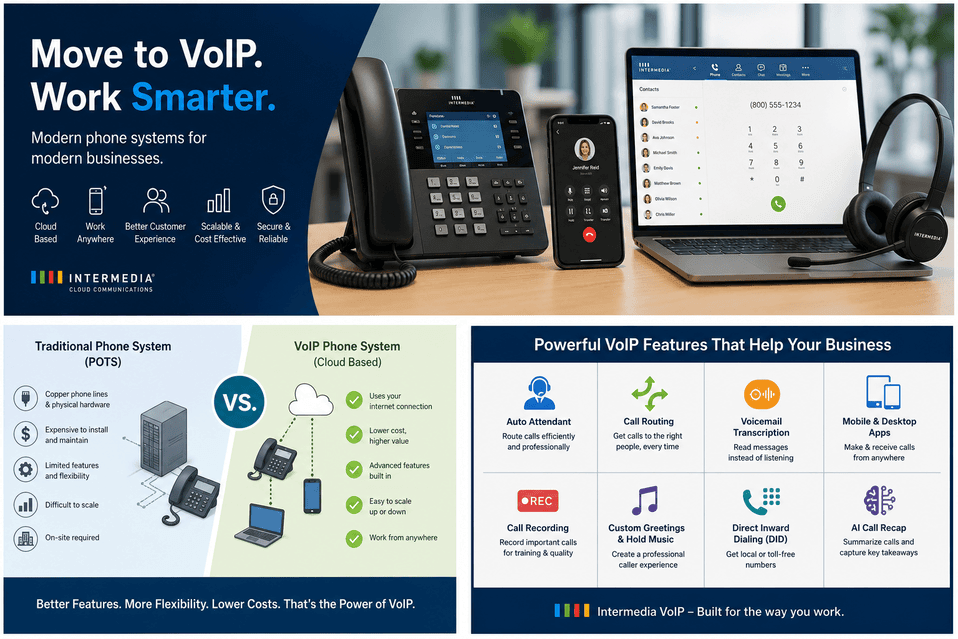
Intermedia VoIP Features for Business Phone Systems
Pennyrile Technologies uses Intermedia as our VoIP partner because it offers a strong set of business communication features for small and medium-sized organizations.
Intermedia Unite includes cloud-based PBX phone system features that can help modernize the way businesses communicate. Depending on the plan and configuration, features may include auto attendants, call routing, direct inbound dialing, custom hold music and greetings, voicemail management, audio transcriptions, call recording, and AI-powered call recap tools.
These features can make a major difference in day-to-day operations. A business can create a more professional call flow, help employees respond to messages faster, and give managers better tools for handling customer communication.
Intermedia’s platform is also designed for modern work environments where employees may need to communicate from the office, from home, or while mobile. Instead of relying only on physical desk phones, users can take advantage of cloud communication tools that support a more flexible workplace.
Common Reasons Businesses Switch to VoIP
Many companies begin considering VoIP when they run into one or more common problems with their current phone setup.
Some businesses are paying too much for old analog phone lines. Others have an aging phone system that is difficult or expensive to repair. Some companies are moving offices and do not want to reinstall outdated phone equipment. Others need better support for remote work, mobile employees, or multiple locations.
Businesses also switch to VoIP because they want features their current system does not provide, such as voicemail-to-email, call recording, call queues, auto attendants, mobile apps, easier call forwarding, or integration with access control systems.
In many cases, the move to VoIP is not just about replacing phone lines. It is about improving how the business communicates.
Is VoIP Reliable?
A properly installed VoIP system can be very reliable, but it depends on the quality of the internet connection, network equipment, firewall configuration, and overall setup.
This is why it is important to work with an IT provider that understands both phones and networks. VoIP traffic needs a stable internet connection and a properly configured business network. Poor cabling, weak Wi-Fi, overloaded firewalls, or unreliable internet service can affect call quality.
Before moving to VoIP, Pennyrile Technologies can help review your current network, internet connection, firewall, switches, and phone needs. This helps make sure your business is ready for a successful VoIP deployment.
What About Fax Lines, Alarm Lines, and Elevators?
One important part of moving from traditional phone lines to VoIP is reviewing every line your business currently has. Some companies still use analog lines for fax machines, postage meters, security alarms, fire alarms, elevators, credit card terminals, or other specialty equipment.
Not every analog line should be moved the same way. Some may be replaced with digital alternatives, some may need an adapter, and some life-safety systems may need to remain on a specific type of service depending on code requirements and vendor recommendations.
Before canceling old phone lines, it is important to identify what each line does. A careful review can prevent problems after the transition.
How the VoIP Migration Process Works
Moving to VoIP does not have to be overwhelming. A typical migration includes reviewing the current phone bill, identifying all phone numbers and lines, documenting call flow, choosing phones or apps, preparing the network, porting phone numbers, configuring users, setting up greetings, and training employees.
A good VoIP migration should answer practical questions before the cut-over happens:
- Which numbers need to be moved?
- Which numbers are still active and necessary?
- How should incoming calls be routed?
- Who needs a desk phone?
- Who needs mobile or desktop app access?
- What should happen after hours?
- What greetings need to be recorded?
- Do any analog devices still need service?
- Does the network need upgrades before the switch?
Planning these details ahead of time helps reduce downtime and confusion.
Why Work with a Local VoIP Provider?
VoIP service is not just about buying phones. It is about designing a communication system that fits how your business actually works.
Working with a local IT provider gives your business someone who can look at the full picture: phones, internet, networking, Wi-Fi, cybersecurity, Microsoft 365, computers, and support. If call quality issues occur, a local provider can help determine whether the problem is the phone service, internet connection, firewall, switch, cabling, or device.
Pennyrile Technologies helps businesses plan, install, support, and manage VoIP phone systems using Intermedia as our VoIP partner. We can help replace outdated phone systems, configure professional call routing, support users, and make sure your phones fit into your overall IT environment.
Is It Time to Move Your Business to VoIP?
If your business is still relying on traditional phone lines or an aging phone system, now may be a good time to consider VoIP. Modern cloud phone systems offer flexibility, mobility, professional call handling, voicemail features, call routing, and easier management than traditional POTS lines.
VoIP can help your business communicate more efficiently, support remote and mobile employees, improve customer experience, and reduce dependence on outdated phone infrastructure.
Whether you are opening a new office, replacing old phone equipment, trying to reduce phone line costs, or looking for better features, Pennyrile Technologies can help you evaluate your options and design a VoIP solution that fits your business.
Contact Pennyrile Technologies today to learn more about business VoIP phone service, Intermedia cloud phone systems, and how your company can make the move from traditional phone lines to a modern communication platform.