
What Is Access Control?
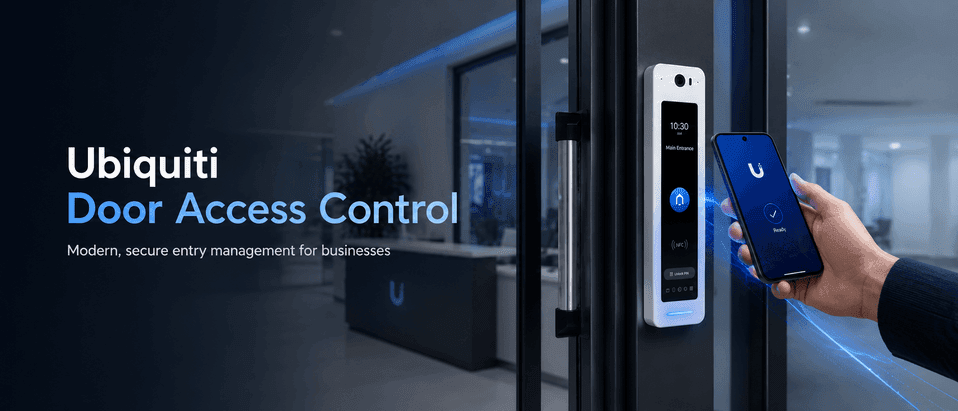
Access control is the process of managing who is allowed to enter a building, room, office, gate, elevator, or other secured area. In its simplest form, access control can be as basic as a lock and key. In modern business environments, however, access control usually refers to an electronic security system that uses credentials such as cards, key fobs, PINs, mobile apps, video intercoms, or biometric-style authentication methods to control entry.
For businesses, churches, schools, warehouses, medical offices, apartment buildings, and other facilities, access control provides a more secure and manageable alternative to traditional keys. Instead of handing out physical keys that can be copied, lost, or forgotten, an access control system allows administrators to create, edit, and remove user permissions from a centralized software platform.
This means a business can decide exactly who has access, when they have access, and which doors or areas they are allowed to enter. For example, employees may be allowed into the main office Monday through Friday during business hours, while managers may have 24/7 access to restricted areas. Vendors, cleaning crews, temporary workers, and visitors can also be given limited access based on schedules or specific doors.
Modern access control also creates accountability. When someone unlocks a door, the system can record the event, including the time, user, entry point, and sometimes video footage. This helps businesses investigate security incidents, monitor employee access, and reduce the risk of unauthorized entry.
A Brief History of Access Control
The earliest form of access control was the traditional mechanical lock and key. For centuries, keys were the primary way to secure homes, businesses, storage rooms, and restricted spaces. While keys are simple and affordable, they also have major drawbacks. They can be lost, stolen, duplicated, or kept by former employees. When security is compromised, a business may have to rekey every affected door.
Electronic access control began gaining popularity in the second half of the 20th century. Key card systems became more common in the 1970s, especially in hotels and commercial buildings. These early systems helped reduce the need for traditional keys and made it easier to change access permissions. Magnetic stripe cards, Wiegand cards, and proximity cards later became common methods for unlocking doors electronically. HID notes that swipe cards emerged in the 1970s and that Wiegand stripe cards appeared in the mid-1970s as part of the evolution of access credentials.
Over time, access control systems became more advanced. Businesses started using centralized controllers, networked door hardware, audit logs, schedules, alarms, and integration with video surveillance. Today, cloud-managed and network-based systems make it possible to manage doors, users, credentials, and alerts from a web interface or mobile app.
This is where Ubiquiti’s Access platform fits in. Ubiquiti has taken the concept of enterprise-style access control and made it more approachable for small and midsize businesses, multi-site organizations, churches, schools, and facilities that want a modern system without overly complicated licensing or management.
Key Features of Ubiquiti’s Access Control System
1. Centralized Door Access Management
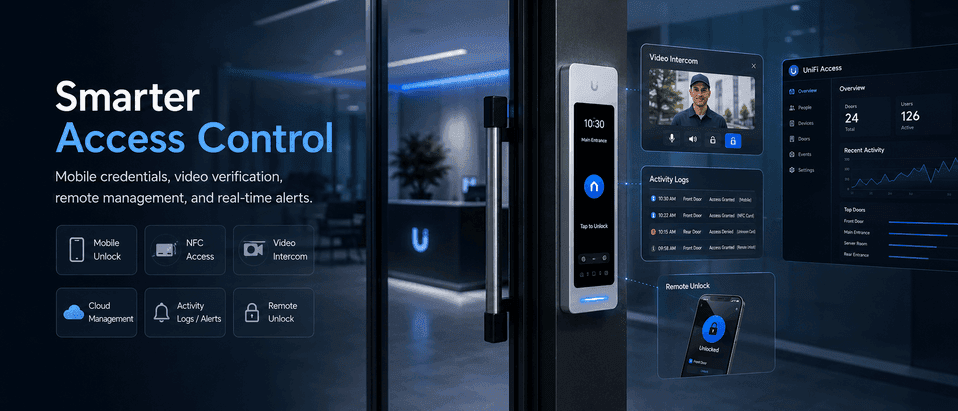
One of the biggest advantages of UniFi Access is centralized management. Administrators can add users, assign credentials, configure doors, set schedules, and review access activity from the UniFi Access application.
This is much more efficient than managing physical keys. When an employee leaves, an administrator can simply remove or disable that person’s access. There is no need to collect keys, rekey locks, or worry that a copy may still exist.
2. Flexible Access Policies and Schedules
UniFi Access allows businesses to create access policies based on users, locations, and schedules. For example, a business can create different access rules for office staff, warehouse employees, managers, vendors, and visitors. UniFi Access Control can create tailored door access policies that align with schedules such as shifts, holidays, and weekends.
This is useful for businesses with multiple departments or different security levels. A front office employee may only need access to the main entrance, while an IT administrator may need access to a server room. Cleaning crews may only need after-hours access on specific days.
3. Multiple Unlock Methods
Ubiquiti offers several ways to unlock doors depending on the reader and deployment. These may include access cards, key fobs, mobile app credentials, PINs, and other reader-based options. Ubiquiti states that UniFi Access supports a variety of door unlock methods to provide a seamless experience for users and administrators.
This flexibility allows a business to choose the credential method that best fits its workflow. Some companies may prefer cards or fobs because they are simple and familiar. Others may prefer mobile credentials to reduce the number of physical items employees must carry.
4. Video and Intercom Integration
A major benefit of UniFi Access Control is its ability to combine access control with video. Ubiquiti’s door access system includes touchscreen readers, live video, and mobile app credential support.
With compatible UniFi readers, intercoms, and cameras, administrators can see who is at the door, communicate with visitors, and remotely unlock entry when appropriate. This is especially useful for offices, churches, clinics, schools, warehouses, and gated areas where staff may not always be near the entrance.
5. Real-Time Monitoring and Event Recording
UniFi Access can provide real-time door activity monitoring, event recording, and alerts. Ubiquiti’s documentation notes that UniFi Access can pair with Access Readers and UniFi Protect cameras to review unlock event recordings and monitor live door activity. It also supports Door Position Sensors to detect door open or closed status and alert administrators to unauthorized access.
This is important because access control is not only about unlocking doors. It is also about visibility. If a door is propped open, forced open, or accessed outside normal hours, administrators need to know quickly.
6. Door, Gate, and Elevator Support
UniFi Access is not limited to standard doors. Ubiquiti offers different Access Control Hubs for doors, gates, and elevators, and those hubs can be mixed within the same deployment.
For larger buildings or multi-tenant facilities, elevator access can be especially valuable. UniFi Access can support controlled floor access, allowing users to access only the floors they are authorized to visit. Ubiquiti’s Elevator Hub documentation explains that floor access can be restricted based on user permissions.
7. Power-over-Ethernet Installation
UniFi Access devices are designed around PoE, or Power over Ethernet. This allows compatible network cables to provide both data and power to access control components. For many businesses, this can simplify installation, reduce wiring complexity, and make the system easier to manage alongside the rest of the network.
PoE-based deployments are especially appealing for organizations that already have UniFi switches or are planning to upgrade their network infrastructure at the same time as their security system.
8. License-Free Platform
One of the strongest selling points of UniFi Access is that it’s license-free. Many traditional access control systems require recurring software fees, per-door licenses, cloud subscriptions, or credential management costs. While every project still has hardware, installation, and maintenance costs, avoiding mandatory software licensing can make UniFi Access a strong long-term value for many small and midsize organizations.
Advantages of Using Ubiquiti UniFi Access
1. Improved Security Compared to Traditional Keys
Traditional keys are difficult to control. Once a key is lost or copied, there is no easy way to know who has it. UniFi Access gives businesses the ability to manage permissions digitally. Lost card? Disable it. Employee leaves? Remove access. Vendor only needs temporary access? Set a limited schedule.
This makes the system much more flexible and secure than relying on mechanical keys alone.
2. Easier Management for Small and Midsize Businesses
Many access control systems are designed for large enterprise environments and can feel overly complex for smaller organizations. UniFi Access provides a clean interface and integrates into the UniFi ecosystem, making it approachable for businesses that already have an IT provider or internal technician familiar with Ubiquiti equipment.
For a local business, church, or office, this can be a major benefit. The system provides modern features without requiring a complicated enterprise security platform.
3. Better Visibility Into Building Activity
With event logs, alerts, video integration, and door status monitoring, UniFi Access gives administrators a clearer picture of what is happening at their facility. This can help answer important questions, such as:
Who opened the front door after hours?
Was the back door left open?
Did a former employee attempt to access the building?
Which entrance is used most often?
Was a vendor on-site during their approved schedule?
This information can help improve security, operations, and accountability.
4. Integration With the UniFi Ecosystem
For businesses already using UniFi network switches, gateways, Wi-Fi access points, or UniFi Protect cameras, UniFi Access is a natural fit. A single ecosystem can reduce management headaches and make it easier to support the overall environment.
This is especially useful for managed service providers and IT companies supporting small businesses. Instead of juggling several disconnected platforms, technicians can manage networking, cameras, and access control within the UniFi environment.
5. Scalable for Growing Organizations
UniFi Access can be used for a single-door deployment or expanded across multiple doors, gates, and elevators. Since Ubiquiti offers multiple hub and reader options, businesses can design a system around their current needs and expand later as the organization grows.
A company might start with the main entrance and server room, then later add warehouse doors, employee entrances, storage rooms, or gates.
Why Businesses Should Consider Ubiquiti Access Control
Ubiquiti UniFi Access Control is a strong option for organizations that want a modern, centralized, and cost-effective access control system. It replaces the weaknesses of traditional keys with digital credentials, user-based permissions, schedules, logs, alerts, and video-enabled entry.
For small and midsize businesses, churches, offices, schools, warehouses, and multi-tenant facilities, UniFi Access Control offers a practical balance of security, usability, and value. It is especially attractive for organizations that already use or are considering UniFi networking and camera systems.
A professionally installed Ubiquiti access control system can help protect people, property, equipment, data rooms, inventory, and restricted areas while making day-to-day access easier to manage. Whether you need to secure one front door or build a complete door, gate, and elevator access solution, UniFi Access provides a modern platform that can grow with your organization.
If you’re ready to move forward with Ubiquiti access control, contact us today for a free quote!